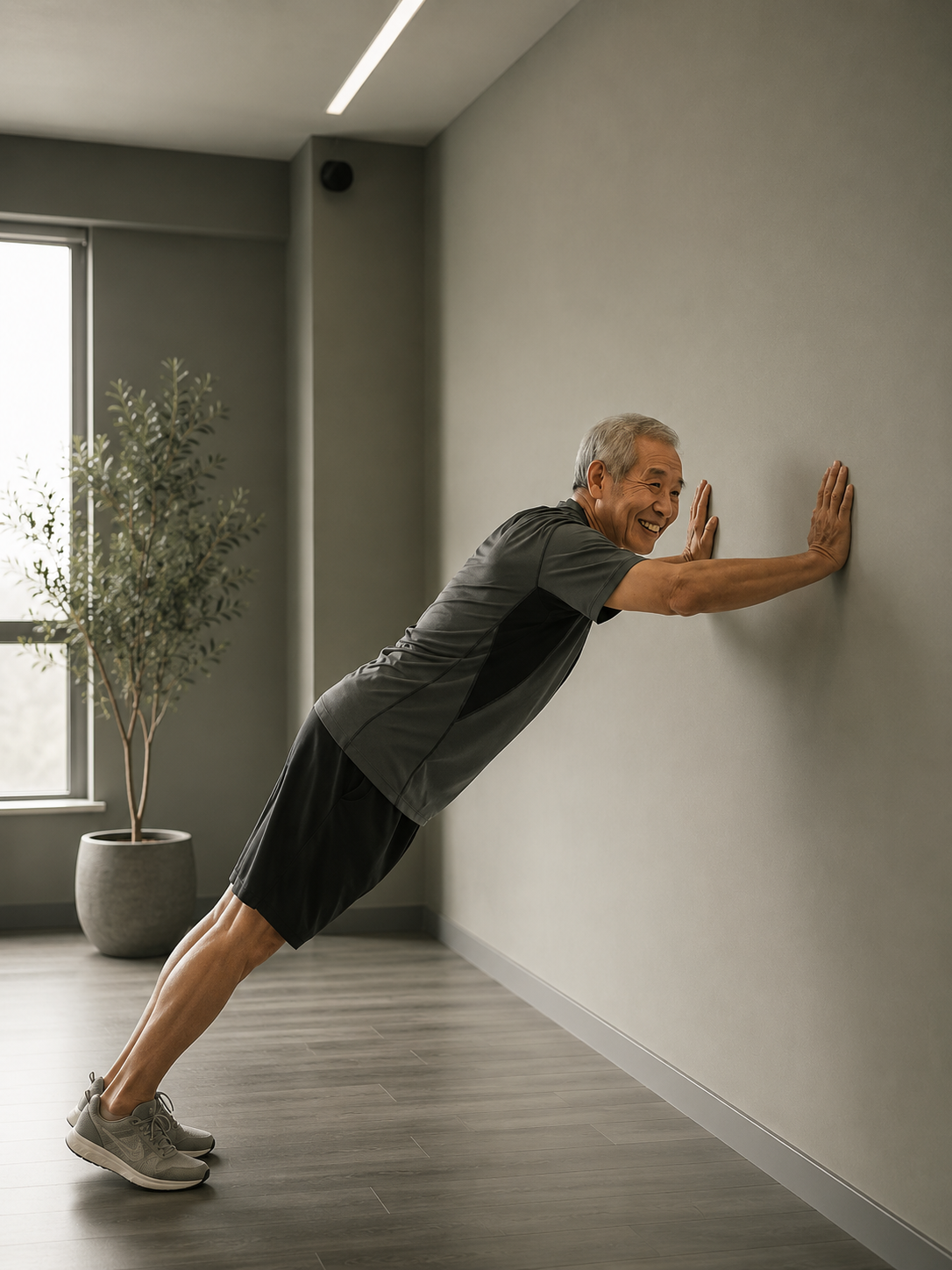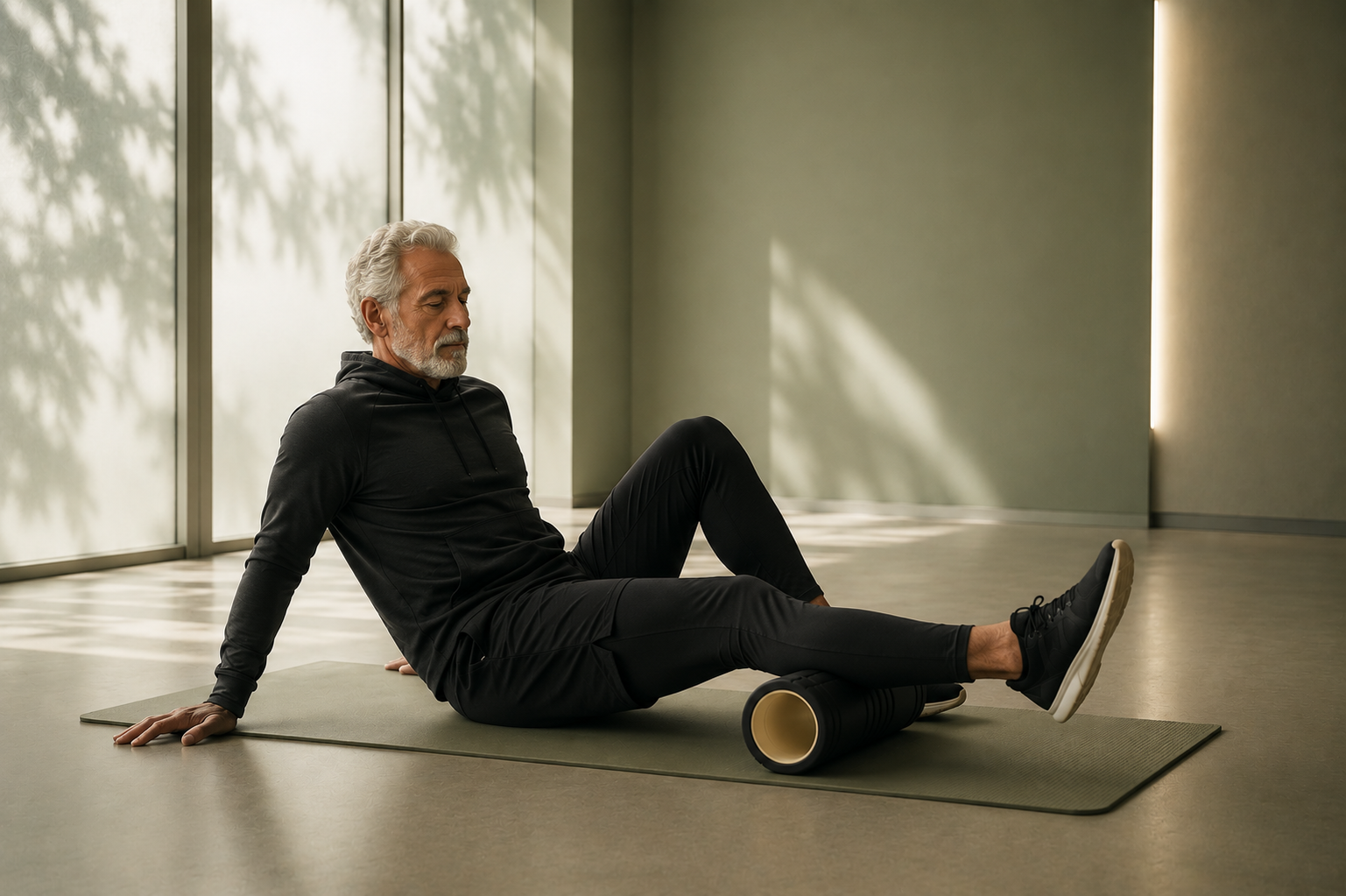
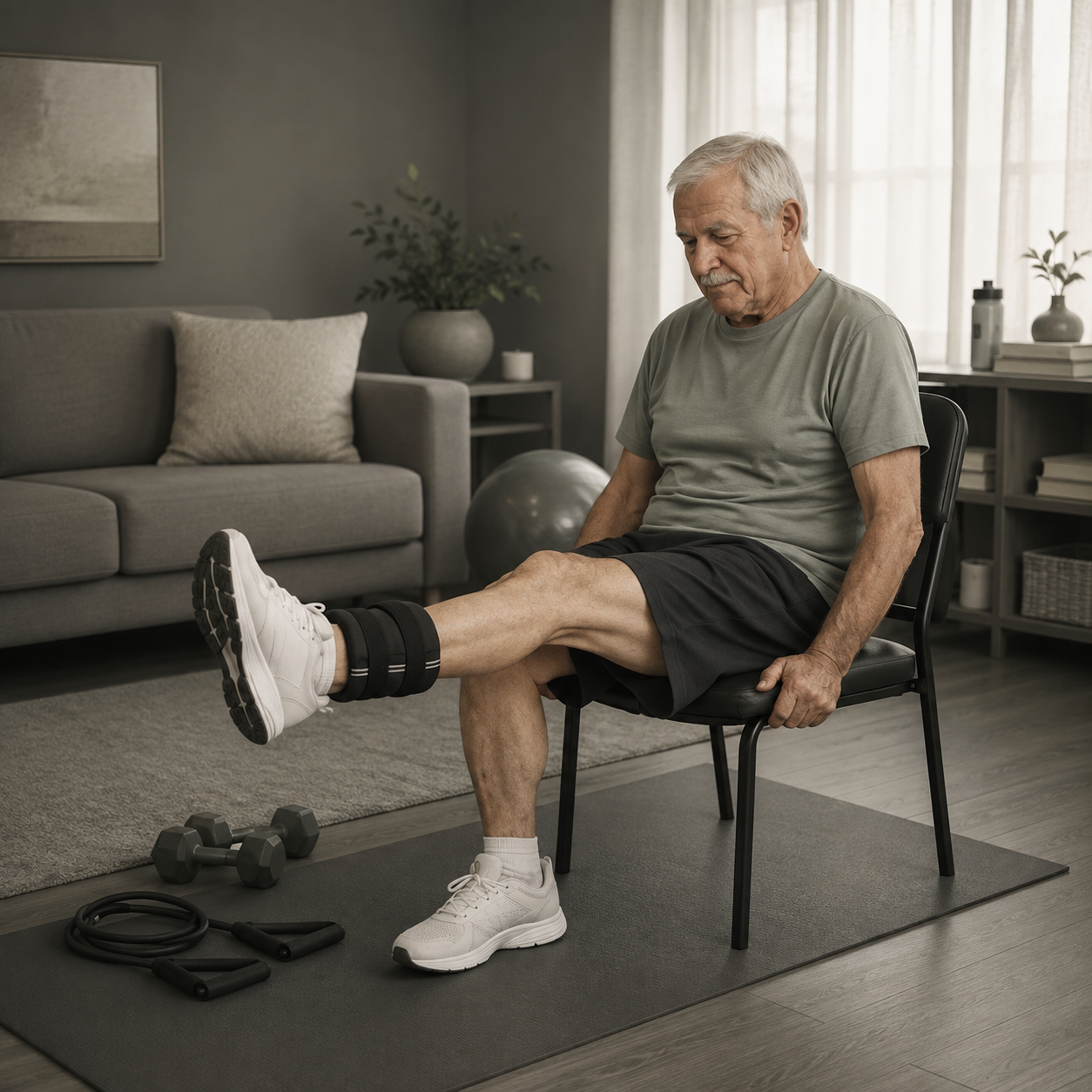
One in four adults over sixty-five falls each year. Of those who fall, roughly one in five ends up with a serious injury — a hip fracture, a head injury, a hospital stay that starts a chain reaction the person never fully recovers from. The industry response to this has been grab bars. Ours is different.
The problem with “fall-proofing” the home.
Removing rugs, adding rails, installing a shower seat — these are useful. They are not a strategy. They are damage control against a body that has stopped being able to catch itself.
The fall doesn't happen because the rug was there. It happens because the ankle didn't fire. The hip didn't stabilize. The reaction time was a half-second too slow. Grab bars don't fix any of that. Training does.
What actually predicts a fall.
- Single-leg stance under 10 seconds. This one variable predicts falls better than almost any other single measurement.
- Slow gait speed. Under 0.8 m/s is a warning sign. Under 0.6 m/s is a red flag.
- Loss of ankle strength and range of motion. The ankle is the first joint that catches you. When it stops responding, the hip and the hand get involved — and the hand doesn't stop a fall well.
- Fear of falling. The most under-discussed variable. Once someone becomes afraid of falling, they move less — and moving less is what actually causes the next fall.
How we train reactive stability.
We build it in three layers, in this order, in your own home:
- Static balance. Two feet, then one foot, with support, then without. Eyes open, then eyes closed. This is week one and two.
- Dynamic balance. Weight shifts, controlled stepping, gait patterns. Turning around while walking — the number-one context of household falls.
- Reactive stability. A controlled nudge. A visual distraction. A dual-task drill where you name capitals while stepping over a line. This is where fall prevention actually happens. It's also the layer most programs skip entirely.
What changes when it works.
Clients don't tell us their single-leg stance improved from six to twenty-two seconds. They tell us they stopped holding the walls in their own hallway. That they walked to the mailbox without the cane they had started carrying “just in case.” That they went to their granddaughter's recital and sat in the third row instead of the aisle.
“I hadn't taken the subway alone in almost a year. Last month I did it twice. Nobody knows I'm proud of that except me. And now you.” — Client, age 68
Fear moves last.
The final piece is fear. Fear of falling is a rational response to a body that has stopped feeling reliable. It does not respond to reassurance. It responds to proof — small, repeated, honest proof that the body will catch you again. That's what we build.
If you or someone you love has started moving carefully in their own house — hand on the wall, one step at a time down the stairs, no more going out at night — that's the moment to act, not the moment to install another rail. See how the Balance & Fall-Prevention program works.