The polite version of this article would tell you strength training is “beneficial for older adults.” That's not what this is. After fifty, strength is the difference between staying in your house and leaving it. Between standing up from a chair and asking for help. Between one fall and the year that follows it.
The number nobody warned you about.
After age thirty, the average adult loses 3–8% of muscle mass per decade. After sixty, that curve steepens. The clinical name for it is sarcopenia. The practical name for it is the reason your father stopped going upstairs to his own bedroom.
Nobody feels this loss on a Tuesday. You feel it on the Tuesday you try to lift the suitcase into the overhead bin and can't — and the surprise of that moment is what people mean when they say “I got old overnight.”
Strength is the tax you pay to keep your options.
Every daily task has a strength cost. Getting off the toilet. Carrying groceries from the car. Picking up a grandchild. Recovering your balance after tripping on the rug. If your strength reserve is high, those costs are invisible. If it's low, every one of them becomes a decision.
Our job at Stand Ready is to widen that reserve so ordinary life stops feeling like an audit.
What we actually train, and why.
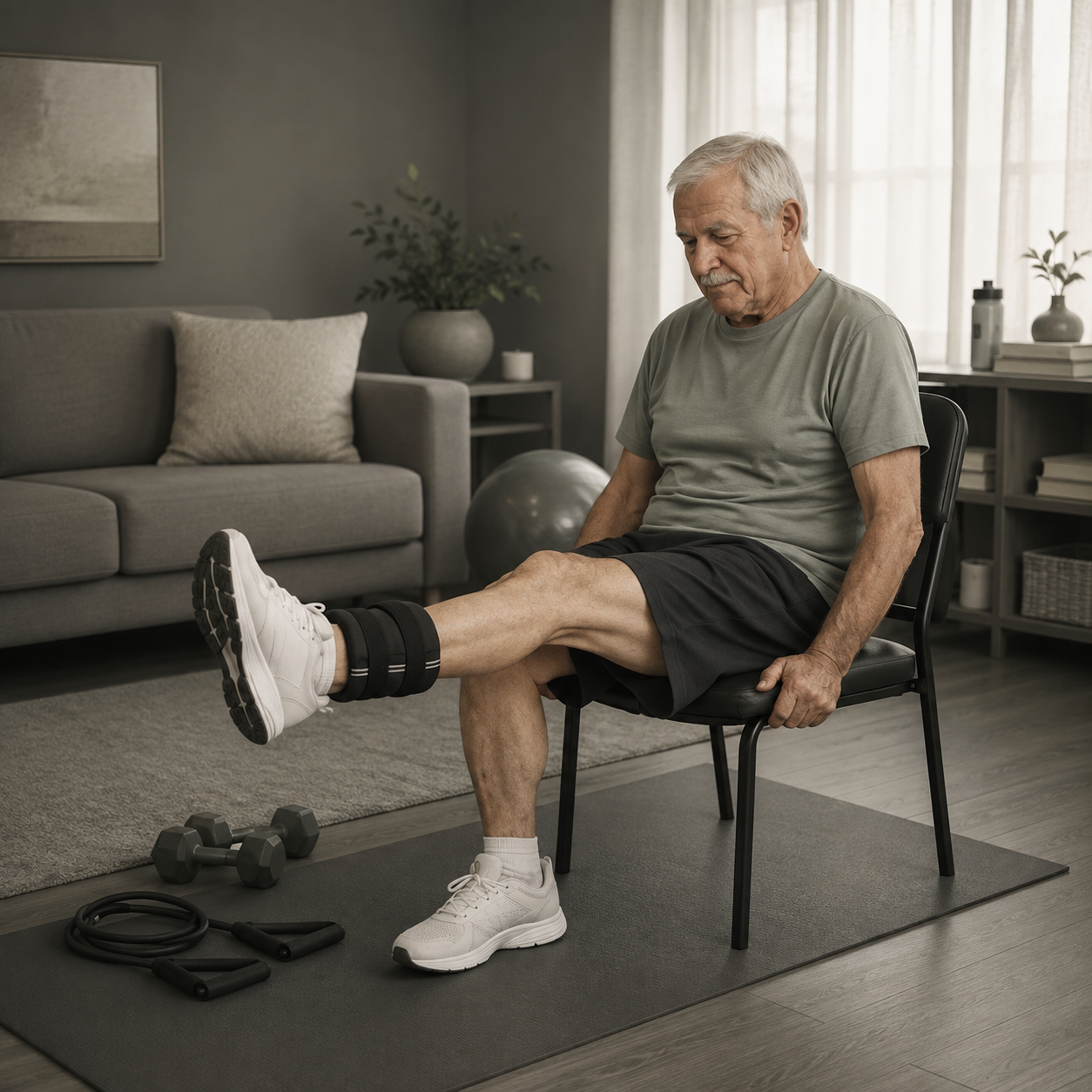
- Sit-to-stand power. The single most predictive movement for independent living in the last two decades of life. We train it in your dining chair, with your kitchen counter as a rail.
- Grip strength. Correlated with virtually every longevity outcome we track. We build it with objects you already own.
- Single-leg stance and reactive stability. Falls don't come from weakness alone. They come from the half-second between losing balance and catching it. That reaction is trainable.
- Loaded carries. Grocery bags, suitcases, grandchildren. The most under-trained movement in modern longevity work.
What it looks like in a real week.
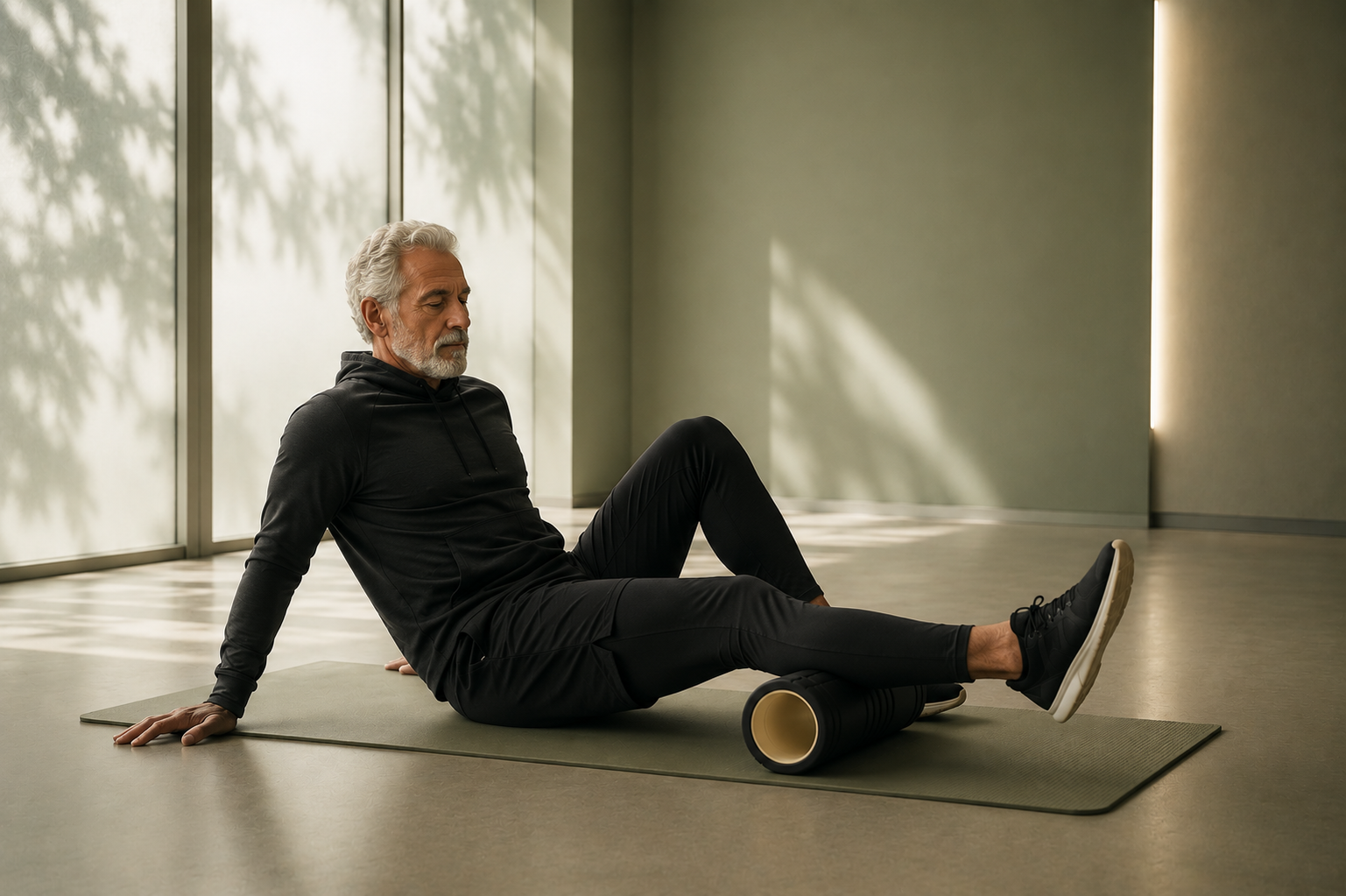
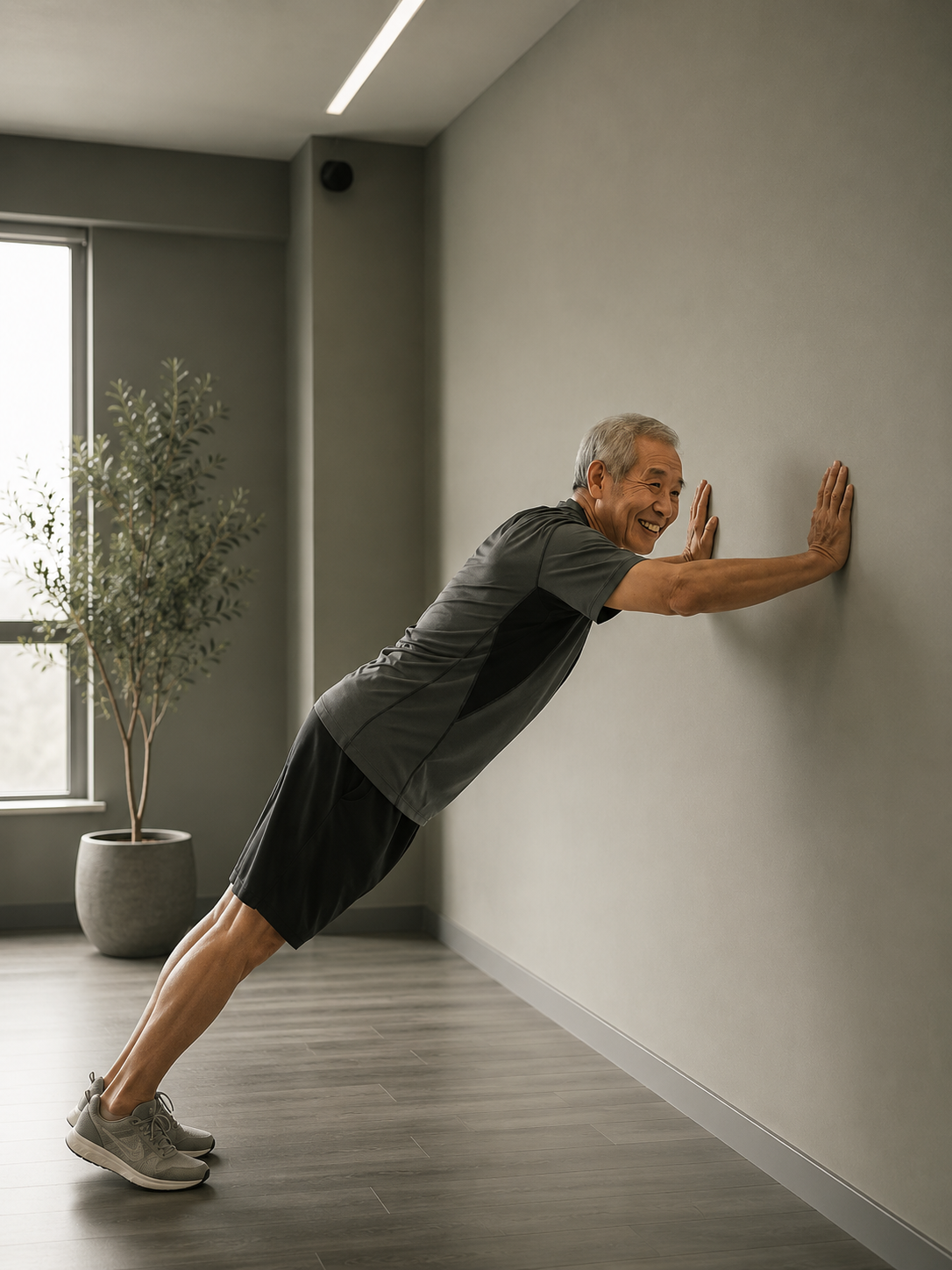
Two sessions in your home. Forty-five minutes each. No equipment we can't fit in a duffel bag. Between sessions, three short things — a walk, a set of sit-to-stands during the news, an ankle drill while the coffee brews. That is the entire program.
People expect this to feel like a gym. It doesn't. It feels like a coach helping you get back the pieces of your life you quietly stopped doing.
“I stopped carrying my own groceries about four years ago. I didn't decide to. It just happened. Now I carry them again. That's not a workout. That's a life.” — Client, age 71
The honest cost of doing nothing.
If you're in your fifties and you do nothing about your strength, the next twenty years will feel like a slow narrowing of what you're allowed to do. Not because anyone said no. Because you'll say no first, quietly, so no one notices.
That's the version of aging we won't let our clients live.
If any of this landed — if the version of your life a year from now includes standing up on your own, carrying your own bags, and walking into every room like you still belong there — that's what we build. Start with a conversation.