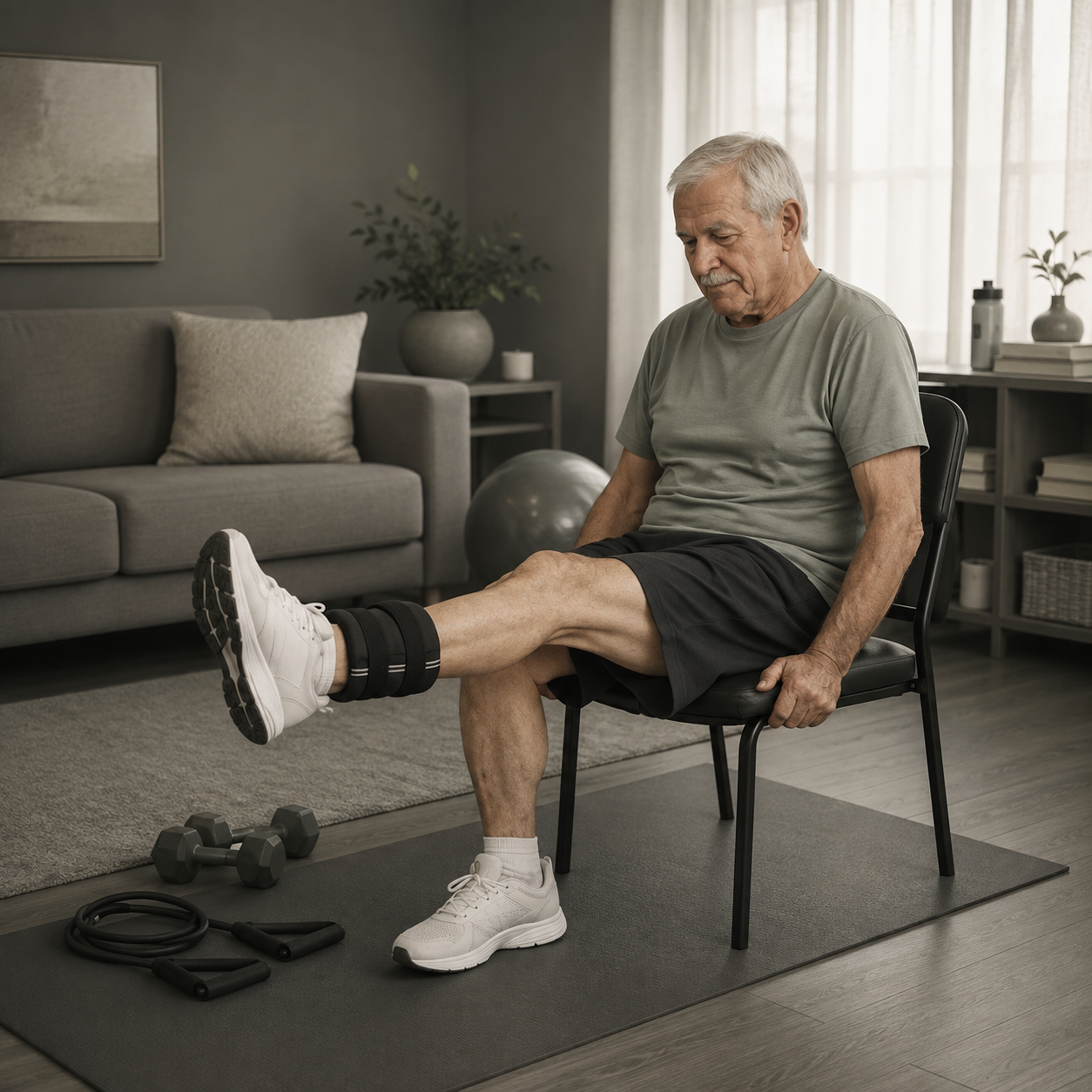
The last day of physical therapy is a strange day. Insurance stops paying. The clinician hands you a printed sheet of exercises. Someone says “keep it up.” You go home. And the actual work of getting your life back — the part nobody mapped out for you — starts the next morning.
The gap that nobody talks about.
PT restored the joint. It did not restore the confidence, the capacity, or the willingness to trust the body again. Those live in a different training zone. Insurance won't pay for that zone, and PT clinics aren't built to deliver it. So it doesn't get delivered.
That's the gap that Stand Ready was built to close.
What actually stalls a recovery after discharge.
- You still trust the good side more than the surgical side. Six months after a knee replacement, most clients are still loading 60/40 in favor of the good leg without knowing it. That imbalance quietly compounds.
- You stopped progressing. The PT sheet is a maintenance protocol. Maintenance is not what a healing tissue needs. It needs progressive load.
- You stopped doing the things you used to do. Not because they hurt. Because you're not sure yet. That uncertainty becomes a habit.
- You have no one measuring anything. Nobody is checking whether you're actually getting stronger. So you don't know whether to push or hold.
Our recovery bridge, in plain terms.
Twelve to sixteen weeks. Two sessions per week in your home. We pick up where PT left you and we drive you back to the version of your life you had before the injury — the walking, the carrying, the trips, the confidence to move fast when you need to.
The structure looks like this:
- Weeks 1–4: rebalance. We identify the compensation patterns you built during PT and reverse them. You start loading the surgical side the way you load the other side.
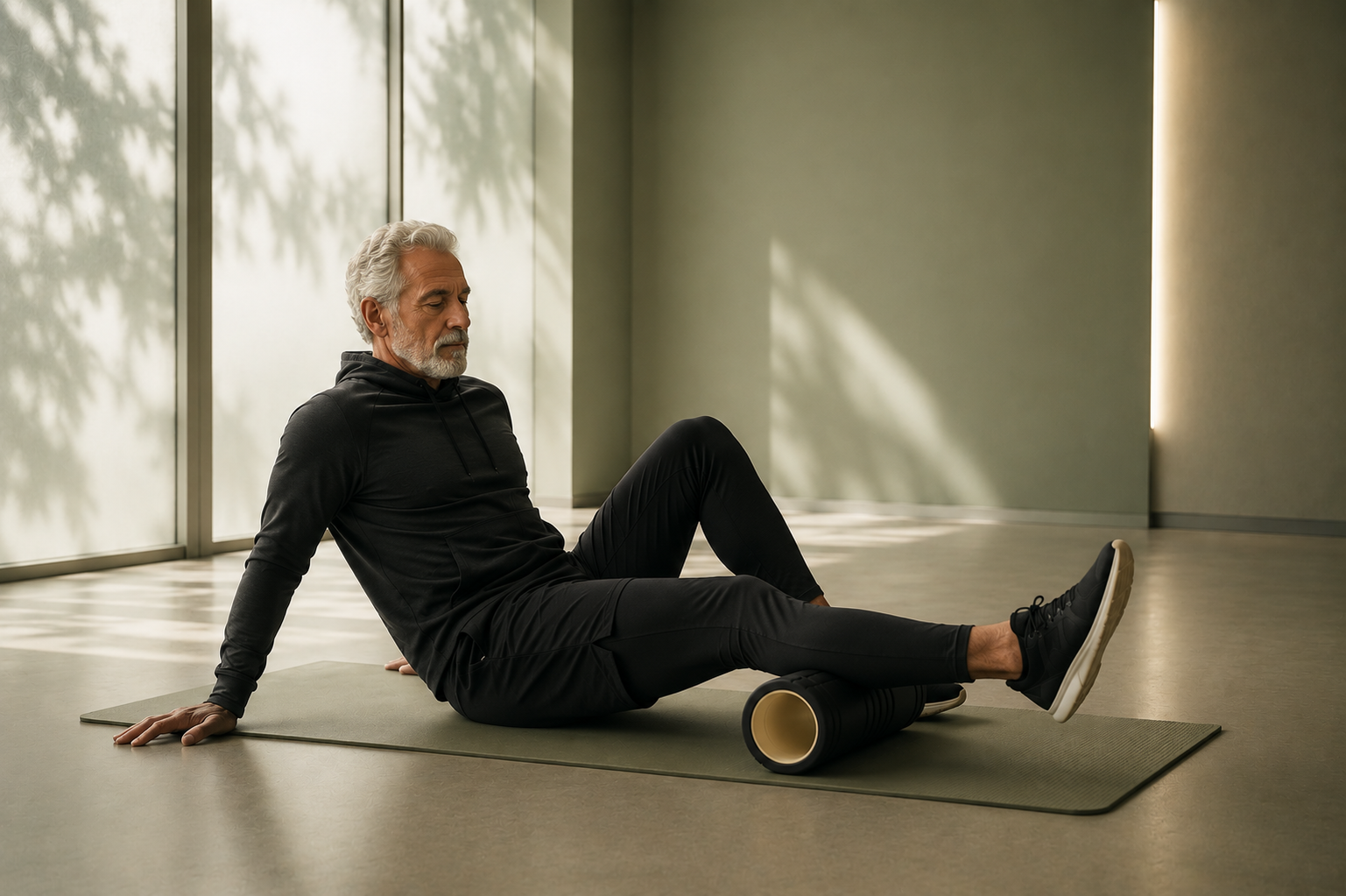
- Weeks 5–10: rebuild. Progressive strength, progressive capacity, progressive complexity. This is where you get back the tissue quality PT couldn't give you.
- Weeks 11–16: retest. We take you back to the movements you were scared of — stairs without a rail, stepping off a curb without looking, carrying a full grocery bag on the surgical side — and we prove to your nervous system that it's safe again.
“My PT was excellent. He told me on the last day: ‘the next part is on you, and most people don't do it.’ He wasn't wrong. I wouldn't have. This is the part I wouldn't have done.” — Client, post-hip replacement, age 74
What we measure, so you know it's working.
- Symmetry: how evenly you load both sides in a sit-to-stand, a step-up, a squat.
- Single-leg strength and single-leg balance on the surgical side, retested every four weeks.
- Gait quality on video, side by side, month one vs. month four.
- Willingness. Which sounds soft — until you notice you started doing things again.
If PT just ended and the next chapter is a printed sheet on your kitchen counter, that's the moment we're built for. See how the Post-Injury Rebuild works, or start with a conversation.